


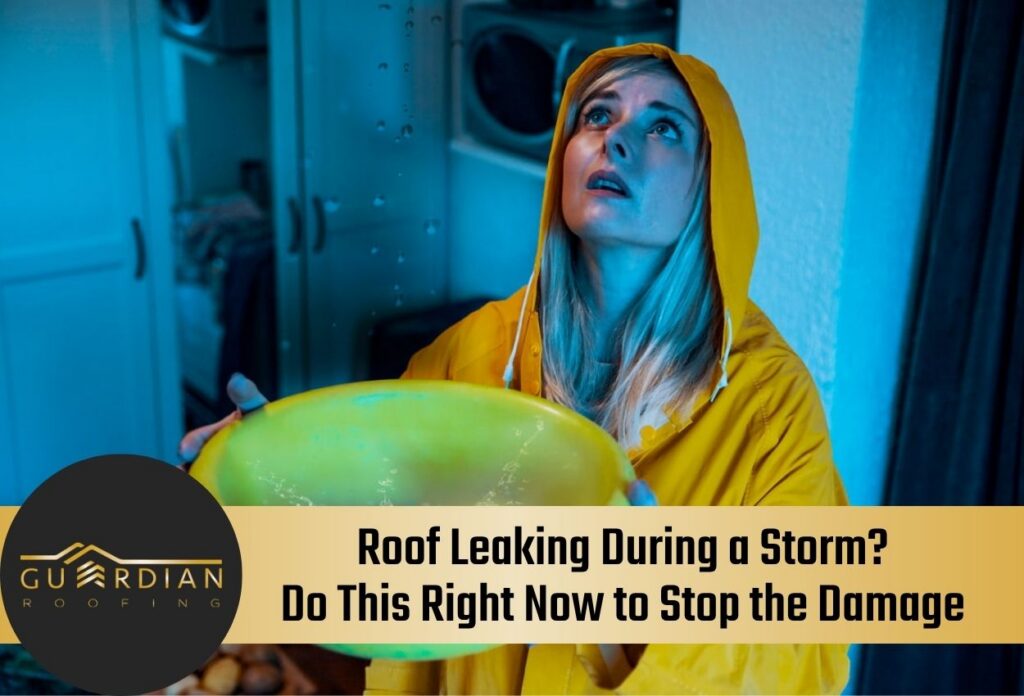

The first 15 to 30 minutes of a roof leak are the highest-risk window for ceiling collapse and spreading water damage. Act fast with three steps: contain the water, protect the ceiling, and document everything for your insurance claim. In Texas, intense spring and summer storms regularly push wind-driven rain through lifted shingles, failed flashing, and roof gaps, turning a small drip into a soaked ceiling within minutes.
Texas homeowners file more storm-related roofing insurance claims per capita than most U.S. states. That makes a roof leak during a storm a common emergency here, not a rare issue, and one that has a clear response path when you stay focused.
How Do You Stop a Roof Leak From Inside During a Storm?
Interior containment cannot stop water from entering your home: it only reduces how far that water spreads, so move fast and follow these steps in order.
- Trace the water trail on the rafters, not just the drip point. The actual breach in your roof can be 3 to 6 feet away from where the drip hits the floor. Look for wet streaks or discoloration along attic rafters and roof deck boards to find the true entry point.
- Puncture any bulging ceiling at its lowest point. Use a utility knife or screwdriver to make a small hole where the ceiling sags most. This releases trapped water in a controlled stream and can prevent the entire ceiling panel from collapsing under the weight.
- Place buckets or bins with at least 5-gallon capacity directly under every drip. Smaller containers overflow fast during heavy Texas downpours. Use multiple containers if the leak spans more than one drip point.
- Lay absorbent material around the perimeter of wet areas. Standard moving blankets only absorb a tiny fraction of a gallon per square foot before water leaks right through them. Contractor-grade towels absorb roughly 0.5 gallons per square foot, so plan the number of towels or blankets you need based on how large the wet zone is.
- Check attic hatches, interior access panels, and ridge vents as secondary water paths. Wind-driven rain common in Texas Gulf Coast storms can push water through ridge vents and attic openings well away from the main breach. Seal or block these temporarily with plastic sheeting if water is entering through them.
These steps manage interior damage: they do not seal the roof. Once the storm passes, the clock starts on exterior repairs, and delaying even 24 to 48 hours can allow water to spread deeper into insulation, framing, and drywall. Contact Guardian Roofing as soon as conditions allow safe access to your roof.
What Can You Put Under a Leaking Roof to Protect Your Ceiling?
6-mil poly sheeting placed in the attic directly above the wet ceiling area is the single most effective immediate interior action most homeowners can take. It deflects active water away from drywall before absorption begins. Three setup options exist, each with different coverage, cost, and performance.
| Protection Setup | Coverage Area | Cost Range | How It Works |
|---|---|---|---|
| 6-mil plastic sheeting laid over attic insulation | Up to 200 sq ft per roll | $15 to $25 | Deflects water: does not absorb: must be directed to a bucket or container |
| Absorbent towels or blankets stacked over wet area | 10 to 15 sq ft per layer | $0 to $20 | Absorbs up to 1 gallon before overflow: limited coverage, slow-drip only |
| Contractor-grade water diversion tarp in attic | Up to 400 sq ft | $30 to $60 | Most effective during active heavy rain: channels water away from ceiling panels. |
Ceiling drywall begins to sag visibly after absorbing about 1 to 2 gallons of water per 4×8 panel. Full panel failure meaning the ceiling drops can occur at just 3 to 5 gallons, so watch for any downward bowing as your warning to act immediately. If the ceiling is already sagging, puncture it at the lowest point as described in the previous section before laying any protection material in the attic above.
Start with 6-mil poly sheeting if only one option is available: it covers the most ground fastest. Move to a contractor-grade tarp for storms producing heavy or sustained rainfall.
What Is a Safe Temporary Fix for a Leaking Roof in Heavy Rain?
No exterior temporary fix is safe until lightning has fully cleared and wind speeds drop below 20 mph in Texas: storm cells regularly produce gusts of 40 to 60 mph, making rooftop access unsafe during the active storm in the vast majority of cases. Interior containment is the only appropriate action until the storm passes completely.
- Wait for safe conditions before going outside. Confirm lightning has stopped for at least 30 minutes and wind speeds are below 20 mph. A single gust above that threshold can knock a person off a wet roof with no warning.
- Priority self-adhesive butyl-based roof repair tape. Apply it directly to wet or dry surfaces over gaps up to 2 inches wide. Butyl-based tape bonds on contact and is rated for wet-surface application, making it the fastest reliable option right after a storm.
- Second priority: roofing cement or plastic roof cement applied with a putty knife. Press it into lifted shingles or open flashing joints for gaps under 2 inches wide. It sets quickly and resists water once in place, though it’s a short-term fix that needs professional follow-up.
- Third priority: a 6-mil minimum blue poly tarp secured with 2×4 wood battens weighted or screwed at the edges. Do not nail directly through the tarp face; that creates new leak points. Instead, wrap the tarp edges around 2×4 boards and screw the boards firmly into the roof deck. FEMA recommends tarp coverage extending 4 to 5 feet past the damaged area on all sides. If the damage is near the peak, extend it at least 4 feet over the ridge. For professional emergency roof tarping, Guardian Roofing can deploy this solution quickly after the storm clears.
These fixes buy time: none of them replace a proper repair. Once conditions allow safe roof access, contact Guardian Roofing quickly, since waiting even 24 to 48 hours allows water to spread deeper into insulation, framing, and drywall.
If Your Roof Leak Is Getting Worse During the Storm, When Is It an Emergency?
A roof leak becomes an emergency the moment any one of four specific thresholds is crossed: at that point, stop managing the drip and start evacuating the room.
- Water dripping from a light fixture or electrical outlet. This is an electrocution risk. Cut the circuit breaker to that zone immediately: do not touch the fixture and treat this as a life-safety emergency, not a home repair situation.
- Ceiling visibly bowing more than 2 inches downward. A ceiling panel at that deflection point holds only a small margin before full collapse. Ceiling drywall can fail at just 3 to 5 gallons of absorbed water, and once the bow reaches 2 inches, that threshold is close.
- Water entry volume filling a 5-gallon bucket in under 60 minutes. At that flow rate, interior containment with towels and tarps cannot keep pace. The breach is large enough that water will spread into framing, insulation, and adjacent rooms fast.
- Multiple simultaneous leak points are developing across different areas of the ceiling. This pattern signals widespread flashing failure or a structural breach, not a single isolated entry point. Single-point drips are manageable: multiple points spreading during one storm are not.
If any one of those four conditions exists, vacate the affected room, cut power to that circuit, and call an emergency roofing contractor. Many Texas metro-area contractors offer 24/7 storm response with 1 to 4 hour arrival windows during major storms. If none of the four thresholds are met meaning one contained drip point, no bowing, no electrical involvement a next-business-day repair call is appropriate rather than an emergency dispatch. That single distinction saves money and keeps emergency lines available for true safety situations.
What Does Emergency Roof Leak Repair Actually Cost, and Is a Quick Fix Worth It?
Repair costs range from $15 for a DIY tarp to $18,000 for a full roof replacement, and the right choice depends on how much damage exists and how old the roof is.
| Repair Option | Cost Range | Lifespan of Fix | Best-Use Scenario |
|---|---|---|---|
| DIY tarp or tape (temporary) | $15 to $60 | 1 to 8 weeks | Single small breach during an active storm |
| Professional emergency patch repair | $300 to $700 | 6 to 18 months | Moderate flashing or shingle failure |
| Partial roof repair (section replacement) | $800 to $2,500 | 5 to 15 years | Localized storm damage under 100 sq ft |
| Full roof replacement | $8,000 to $18,000 | 20 to 30 years (asphalt shingles) | Widespread damage or roof past 15 to 20 years old |
The tarp-and-tape approach is only a bridge: it buys time, not protection. Delaying a professional repair after a storm leak by more than 48 to 72 hours increases average interior water damage remediation costs by 30% to 40%, based on industry moisture damage progression data, making early professional contact a measurable financial decision, not just a convenience.
Insurance coverage matters here too, but remember that during a declared disaster, Texas law gives insurers an extra 15 days to process your claim. Wind and hail typically do not cover gradual leaks or maintenance-related failures. Document everything with timestamped photos within the first hour after the storm: that single step can protect your insurance claim. Guardian Roofing works with homeowners through the repair and documentation process to help keep the path to coverage as straightforward as possible.
Ready to Stop the Damage? Here’s How to Reach an Emergency Roofer Now
Waiting more than 48 to 72 hours after a storm leak can increase water damage remediation costs by 30% to 40%, so fast action after a Texas storm is a financial decision, not just a precaution. Guardian Roofing serves Texas homeowners with 24/7 storm response and supports the documentation process your insurance claim will need. Our emergency storm damage roof repair service is available when you need it most, and our residential roof repair team is ready to restore your home after the storm clears.
Not ready to schedule? Learn more about emergency storm damage roof repair.